Practical guides for shipping production AI
Step-by-step, no-hype guides on AI readiness, data foundations, Microsoft/Azure, document intelligence, and how to buy AI work. Looking for opinion and analysis instead? See the blog.
Start here

AI Governance Framework: The Practical Version That Actually Gets Used
Most AI governance frameworks are written for banks with compliance armies. Here's a practical AI governance framework for mid-market companies — five parts, real artifacts, and a 90-day plan to stand it up.
 Alex Ryan 14 min
Credit-Based Delivery vs. Traditional Consulting: A Side-by-Side
Hourly rates, fixed-bid SOWs, and open-ended retainers all quietly misalign the vendor's incentives with your outcome. Here's how credit-based delivery works next to traditional consulting—and why it ships more usable production AI.
Alex Ryan 12 min 
Subscription vs. Project: How to Buy AI Work in 2026
The way you buy AI work shapes what you get. Subscriptions keep momentum; projects deliver a defined thing. Here's how to choose — and how to combine them.
 Jonathan Luciano 11 min
Forge or Labs: When to Run AI Continuously vs. as a Project
Some AI work is a steady roadmap; some is a dedicated build with a finish line. Knowing which is which saves money and momentum. Here's how we decide.
Alex Ryan 10 min 
Predictive Maintenance for Mid-Market Manufacturers: A Realistic Roadmap
You don't need a sensor on every machine or a data science team to get value from predictive maintenance. You need a realistic, staged roadmap. Here it is.

Graph RAG vs. Vector RAG: Choosing Retrieval for Engineering Documents
Vector search is the default for RAG, but engineering and AEC documents are full of cross-references that pure vectors miss. Here is when graph-aware retrieval earns its complexity.

The Data Readiness Checklist to Run Before Your First AI Project
AI projects don't fail at the model. They fail at the data underneath. Here is the practical checklist we run before greenlighting a build.
Alex Ryan 10 min 
Microsoft Fabric vs. Snowflake for Manufacturers: An Honest Comparison
Both can run your analytics. The right choice for a mid-market manufacturer usually comes down to your existing Microsoft footprint, your team, and where your data already lives — not benchmarks.

AI in Construction: Beyond the Hype to Practical Jobsite and Office Wins
Construction is one of the least digitized industries, and AI hype has been especially disconnected from reality. Here are the use cases that actually work for GCs and specialty contractors.
Alex Ryan 14 min 
What an AI Security Assessment Actually Evaluates (And Why Most Companies Need One)
AI systems introduce attack surfaces that traditional security assessments miss entirely — prompt injection, data leakage, model manipulation, and shadow AI. Here's what an AI security assessment actually evaluates, what you get at the end, and why most companies deploying AI need one.
Alex Ryan 12 min 
How to Build an Enterprise RAG System That Actually Works
Most enterprise RAG implementations fail because teams treat retrieval as a search problem instead of a knowledge architecture problem. Here's how to build one that your organization will actually trust.

Vector Databases Explained: What Engineering Leaders Need to Know
Vector databases are the infrastructure layer behind every enterprise AI search and RAG system. Here's what they actually do, when you need one, and how to choose between the major options.

AI Governance for Regulated Industries: A Practical Framework
Regulated industries can't treat AI governance as an afterthought. But most governance frameworks are either too abstract to implement or too rigid to allow innovation. Here's a practical middle ground.
Alex Ryan 11 min 
Semantic Search vs. Keyword Search: When to Use Each (And Why Hybrid Wins)
Semantic search understands meaning. Keyword search matches terms. Most enterprise systems need both. Here's a practical guide to choosing the right search architecture for your use case.

The AI Team Structure: Who You Actually Need to Hire (And Who You Don't)
Most companies either over-hire for AI (building a data science team before they have data infrastructure) or under-hire (expecting one engineer to do everything). Here's what an effective AI team actually looks like.
Jonathan Luciano 10 min 
Microsoft Fabric for Manufacturing: What You Need to Know
Microsoft Fabric is changing how manufacturers manage production data, quality metrics, and supply chain analytics. Here's what manufacturing companies need to know — and where to start.
What Is an AI Readiness Assessment? Everything You Need to Know Before Starting
An AI readiness assessment evaluates whether your organization has the data, infrastructure, talent, and governance to succeed with AI. Here's what it covers, what it costs, and why most companies skip it at their own expense.
Alex Ryan 12 min 
Hiring an AI Consultant vs. Building In-House: A Decision Framework
Should you hire an AI consulting firm or build your own team? The answer isn't always what you'd expect. Here's a practical framework for making the right call based on your company's size, goals, and timeline.
Jonathan Luciano 14 min 
Azure AI Search vs. Elasticsearch: A Practical Comparison for Enterprise Teams
Choosing between Azure AI Search and Elasticsearch? This practical comparison covers cost, AI capabilities, vector search, managed vs. self-hosted trade-offs, and which one fits your architecture.
How to Build a Data Governance Framework From Scratch (Without Drowning in Policy Documents)
Most data governance frameworks fail because they start with policy and end with shelfware. Here's how to build one that actually works — starting with the data problems your business already has.

What a Virtual Chief AI Officer Does (And When You Need One)
Most companies know they need AI leadership. Few can justify a $350K executive hire to figure out where to start. A virtual Chief AI Officer gives you the strategy, governance, and accountability of a full-time CAIO — without the full-time cost.
Alex Ryan 14 min 
AI Compliance Documentation in Aerospace & Defense: What You Need to Know
Aerospace and defense suppliers spend 25-40% of engineer time on compliance documentation. AI is changing that — automating document generation, export control reviews, and audit preparation while maintaining full traceability. Here's what's real and what's hype.
Alex Ryan 15 min 
The Real Cost of Bad Data (And How to Fix It Before It Kills Your AI Initiative)
Bad data costs the average mid-market company 15-25% of revenue. Here's how to calculate what dirty data is actually costing your organization — and a practical plan to fix it.
Alex Ryan 12 min 
The SMB Guide to AI: You Don't Need a Fortune 500 Budget
Think AI is only for big companies with massive budgets? Wrong. Small and mid-size businesses are deploying AI that pays for itself in months — not years. Here's a practical guide to getting started without overspending or overcomplicating.
Jonathan Luciano 13 min 
Microsoft Fabric for Mid-Market Companies: A Practical Getting Started Guide
Microsoft Fabric promises to unify your entire data stack — but the marketing doesn't tell you how to actually adopt it. Here's a practical guide for mid-market companies: what Fabric does, what it replaces, where to start, and what it really costs.
Alex Ryan 14 min 
How to Calculate ROI on AI Before You Spend a Dollar
Most AI ROI calculations are either absurdly optimistic or hopelessly vague. Here's a practical framework for estimating real AI returns — before you commit budget — with templates, real numbers, and the mistakes that lead to bad projections.
Jonathan Luciano 15 min 
Power Platform vs. Custom Development: When to Use Each (And When to Use Both)
Power Platform can replace months of custom development — until it can't. Here's a practical decision framework for when to use Power Apps, Power Automate, and Copilot Studio vs. building custom.

Microsoft Copilot Studio: What It Is, When to Use It, and How to Get Started
Copilot Studio lets you build custom AI agents without writing code — but it's not the right tool for every job. Here's a practical guide to what Copilot Studio can and can't do, with real examples.

AI for Small Manufacturers: Where to Start When You Don't Have a Data Team
You don't need a data science team to use AI in manufacturing. Here's a practical starting guide for small and mid-size manufacturers — what to do first, what to skip, and what it actually costs.
Jonathan Luciano 11 min 
What an AI Readiness Assessment Actually Covers
An AI readiness assessment isn't a vendor pitch or a checklist. It's a systematic evaluation of six critical dimensions that determine whether your AI initiatives will succeed or struggle.
Alex Ryan 12 min 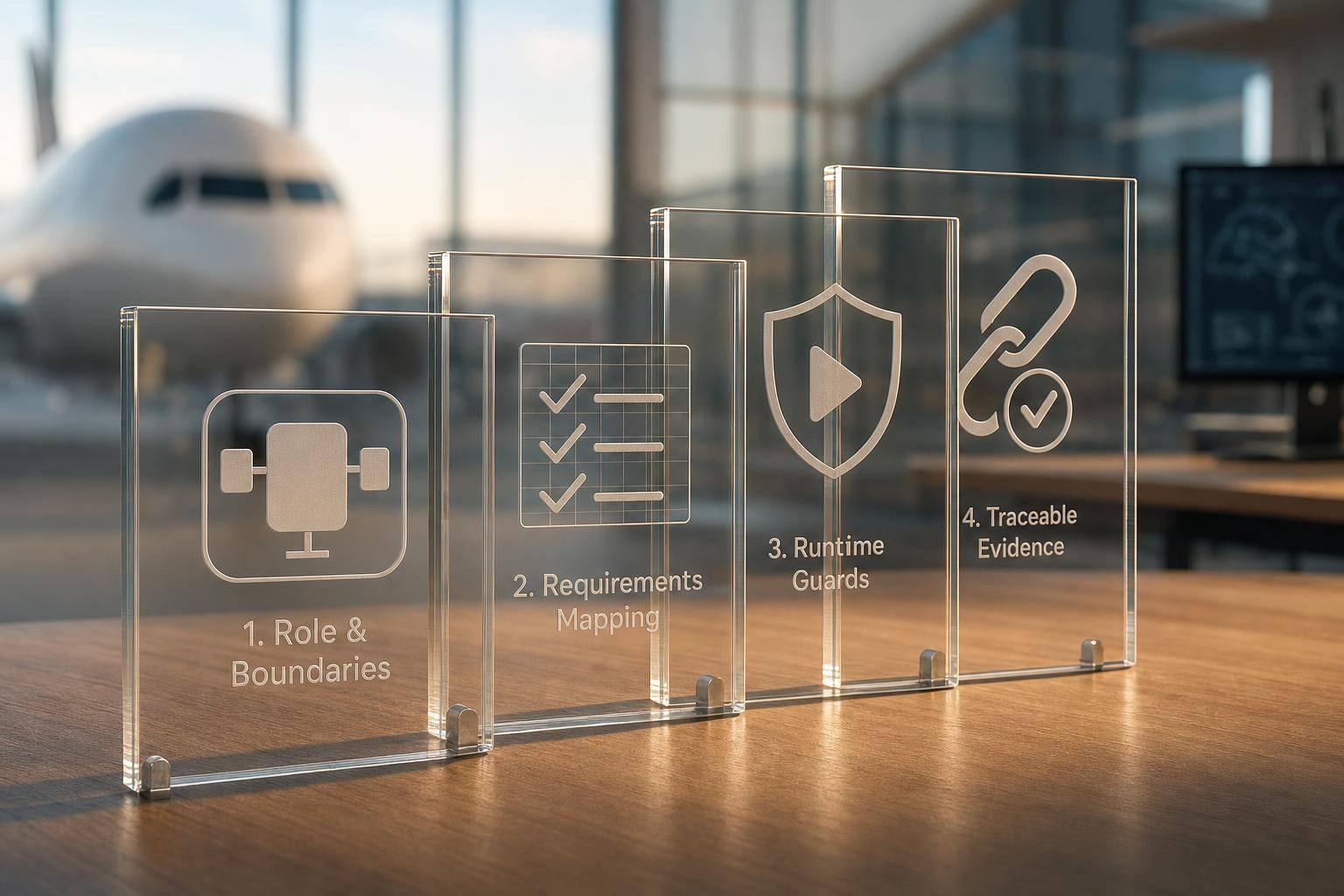
EASA AI Alignment Guide for Certifiable Systems
Treat EASA alignment as an early task: define AI role and boundaries, map requirements, use runtime guards, and retain traceable evidence.
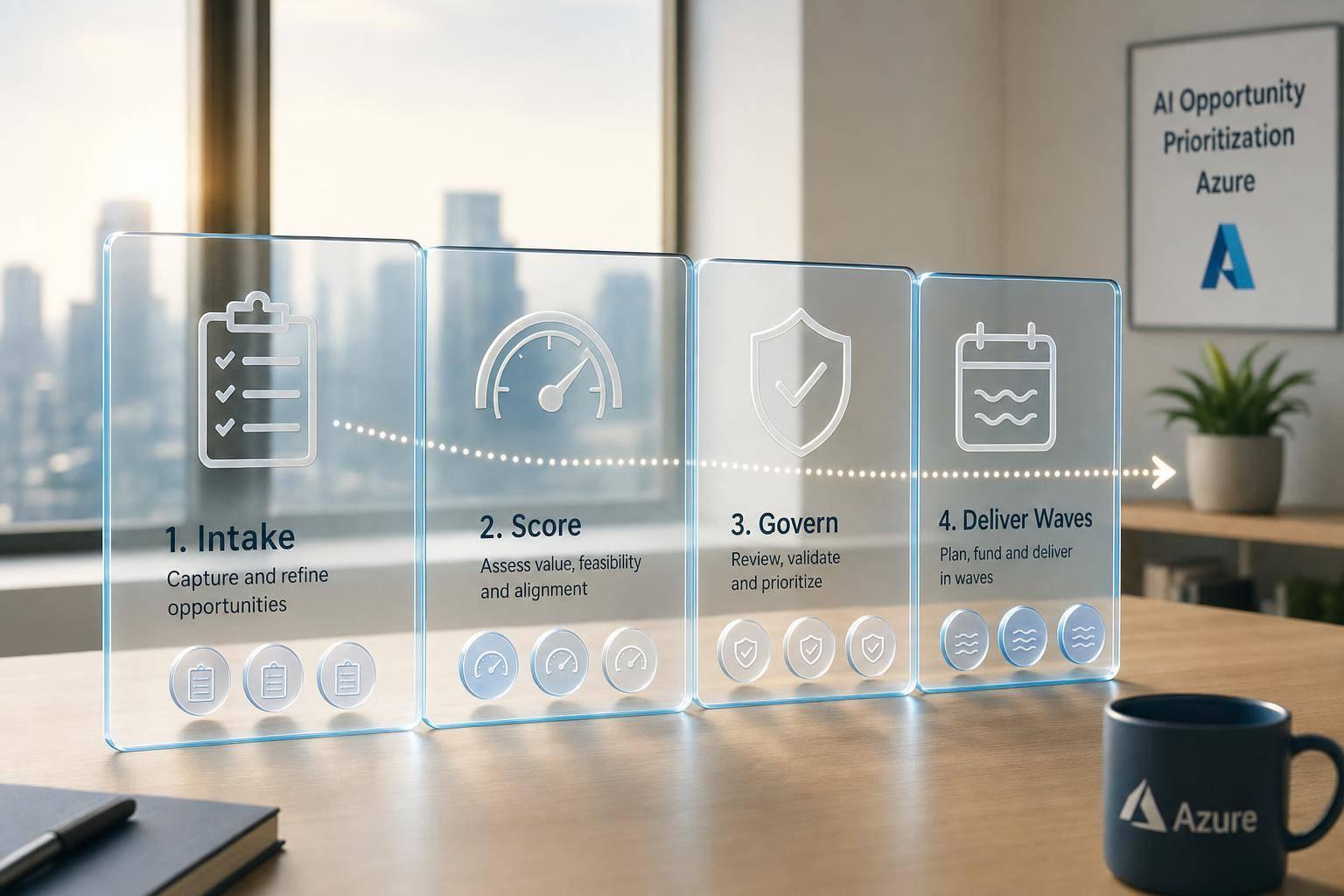
AI Opportunity Prioritization: Guide for Azure
Standardize intake, score use cases, enforce governance, and plan delivery waves to turn Azure AI requests into funded roadmaps.

After-Hours Dispatch AI on Azure: Guide
Automate overnight dispatch on Azure: voice intake, AI transcription and classification, SOP retrieval, governed escalation, and audit trail.

Real-Time vs. Batch Feature Updates
Use real-time only when freshness changes decisions; otherwise prefer batch or a hybrid to cut cost, complexity, and audit risk.
Alex Ryan 9 min 
Webhook Signature Validation on Azure: Guide
Verify raw webhook bytes with HMAC, enforce timestamp and replay checks, store secrets in Key Vault, and log failures in App Insights.

Activity Duration Forecasting on Azure: Guide
Guide to building production-ready activity-duration forecasts on Azure: data pipelines, time-aware training, batch scoring, Power BI, and governance.
Jon Luciano 15 min